You’re halfway through a camping trip, camera batteries lined up, lights glowing softly, coffee warming on a portable kettle. Then the power station runs out sooner than you expected, leaving you stuck too early in the trip. That sinking feeling is universal when the heartbeat of your setup fails. The truth is, batteries behave like living systems that respond to how you treat them.
Treat them well and they last for years, giving you reliable power at home or on the road. Ignore the small habits, and they drain faster than they should. This guide shares practical ways to extend life and improve charging efficiency in a solar generator, using both science and simple routines.
Types of Batteries Commonly Used
Every solar generator relies on a battery, but not all batteries are equal. The chemistry inside determines how safe it runs, how heavy it feels to carry, and how long it keeps performing. DJI uses lithium iron phosphate (LiFePO₄) in its solar generators because it is stable, long-lasting, and far safer in stressful conditions than older types.
Most travelers and creators notice the difference in real life, years of dependable use without unexpected failures, not just in spec sheets.
|
|
|
|
|
|
|
|
|
|
|
|
|
|
|
|
People still use all three, but for solar generator battery tips that matter today, LiFePO₄ is the clear winner.
Factors That Affect Battery Life and Charging Efficiency
Battery life depends on the conditions in which you use it and the habits you follow. Anyone who has tried portable generator charging on a humid beach or frozen hillside knows that environment, load, and timing all make a difference. Below are the main factors.
Depth of Discharge
Think of a battery like a muscle. Push it to exhaustion every time, and it won’t recover well. Depth of discharge refers to how much of a battery’s capacity you use before recharging it. Keeping a solar generator above 20% avoids that “scraping the bottom” damage.
DJI systems have built-in protections, but forming the habit yourself ensures you won’t be caught off-guard. A traveler with a drone and lights running through the night will thank themselves for topping up early instead of waiting for alarms.
Charge Cycles and Maintenance
Every full cycle, from 100% down to empty and back, slowly reduces capacity. That’s normal, but the way you handle those cycles determines how quickly the battery’s capacity declines. Shorter top-ups are gentler than deep drains. Maintenance goes beyond charging.
Keeping the device clean, storing it at a moderate charge when unused, and running a full calibration cycle every few months helps keep the readings accurate. It’s the difference between a power station that weakens after two years and one that stays reliable for nearly a decade.
Temperature and Environment
Batteries don’t enjoy extremes. Cold stiffens the chemistry. Heat accelerates wear. Leave a solar generator inside a hot car and you’ll smell faint plastic and feel the unit warm to the touch; that’s damage already at work. DJI includes built-in protections, but environmental conditions still play the biggest role.
|
|
|
|
|
|
|
|
|
|
|
|
|
|
|
|
Think of batteries like people: comfortable in mild climates, struggling in extremes.
Load Management
The more devices you run at once, the harder the generator works and the faster the battery drains. Run multiple laptops, cameras, and a projector all at once, and you’ll see runtime collapse. Load management is about priority. Charge what matters first, stagger heavier devices, and save high-wattage appliances for moments you can monitor closely. For creators in the field, even a small change in sequence extends hours of work.
Charging Inputs
Solar, car, and wall charging all behave differently. A wall socket can fill a DJI Power 1000 to 80% in less than an hour. Solar panels might take half a day, depending on sunlight and placement. Car charging is convenient but slower. The trick is knowing when to use each. Portable generator charging with solar is excellent for long off-grid days, but pairing with DJI’s expansion or car modules gives flexibility.
Best Practices to Extend Battery Life
Longer life comes from discipline, not chance. Below are simple but effective habits.
Avoid Over-Discharging
Emptying a battery to 0% repeatedly shortens its future. Even though DJI’s systems protect against deep collapse, it’s smarter to recharge earlier. Keep a buffer. On the road, many creators start topping up when their screen shows 20%. That habit preserves chemistry and reduces anxiety.
Store at Mid-Level When Not in Use
Leaving a solar generator fully charged for weeks stresses the cells. Leaving it empty does worse. DJI units even auto-discharge to safe storage levels when left unused. Storing properly is like leaving food in a fridge instead of on the counter; it simply lasts longer.
Allow Cool-Down Before Charging
Right after heavy use, cells are warm. Plugging in too soon pushes them harder. Give 20–30 minutes of rest. In practice, that means finishing a drone shoot, letting the generator sit under shade, then connecting to solar panels or wall power. It’s a pause that pays off.
Use Compatible DJI Chargers and Modules
Not all chargers are safe. Using DJI’s official chargers ensures proper flow. Benefits include:
- Correct the current and voltage for efficiency
- Faster charging without overheating
- Built-in protection features
- Smooth integration with expansion packs
- Longer usable life for cells
Using uncertified third-party chargers may save money upfront but often reduces performance and battery life over time.
Perform Occasional Full Cycles
Calibration matters. Running a full discharge and recharge every few months helps the system report levels accurately. This isn’t daily maintenance but periodic housekeeping. It ensures the display reflects reality, which matters when power planning during critical work.
Tips for Maximizing Charging Efficiency with Solar Panels
Sunlight is free but unpredictable. Making the most of it requires attention to placement, timing, and supporting tech.
Optimal Panel Placement and Angle
Panels love direct sunlight. Even a few degrees off cuts power. Shift through the day if possible. Keep panels clean from dust, salt, or leaves to reduce harvest. Field users often wipe panels with a cloth before sunrise to prepare for peak capture.
Use of MPPT Controllers
Maximum Power Point Tracking (MPPT) acts like a translator between panels and batteries. DJI’s modules include MPPT, which squeezes steady energy from changing light. Without it, much of the available sunlight is wasted.
Charge During the Right Hours
Morning and late afternoon temperatures are cooler, which helps the battery charge more efficiently and safely. Midday offers intense power but also more heat. Splitting charge sessions across cooler hours increases efficiency. It’s like filling a water tank slowly instead of dumping in all at once under strain.
Avoid Simultaneous Heavy Loads
Charging while running a heater or projector drags efficiency down. Energy flows out as fast as it enters. Allow lighter loads during main charging windows. This ensures more of the sunlight goes into storage rather than straight out.
Expand Capacity with DJI Add-Ons
Extra modules mean more storage. They reduce stress on the main battery and extend runtime. For travelers on multi-day shoots or families relying on backup power during outages, add-ons mean peace of mind. The system becomes more flexible, less fragile.
DJI Solar Generator Systems Designed for Efficiency
DJI applies years of battery expertise from drones into its power stations. The focus is stability, efficiency, and ease of use.
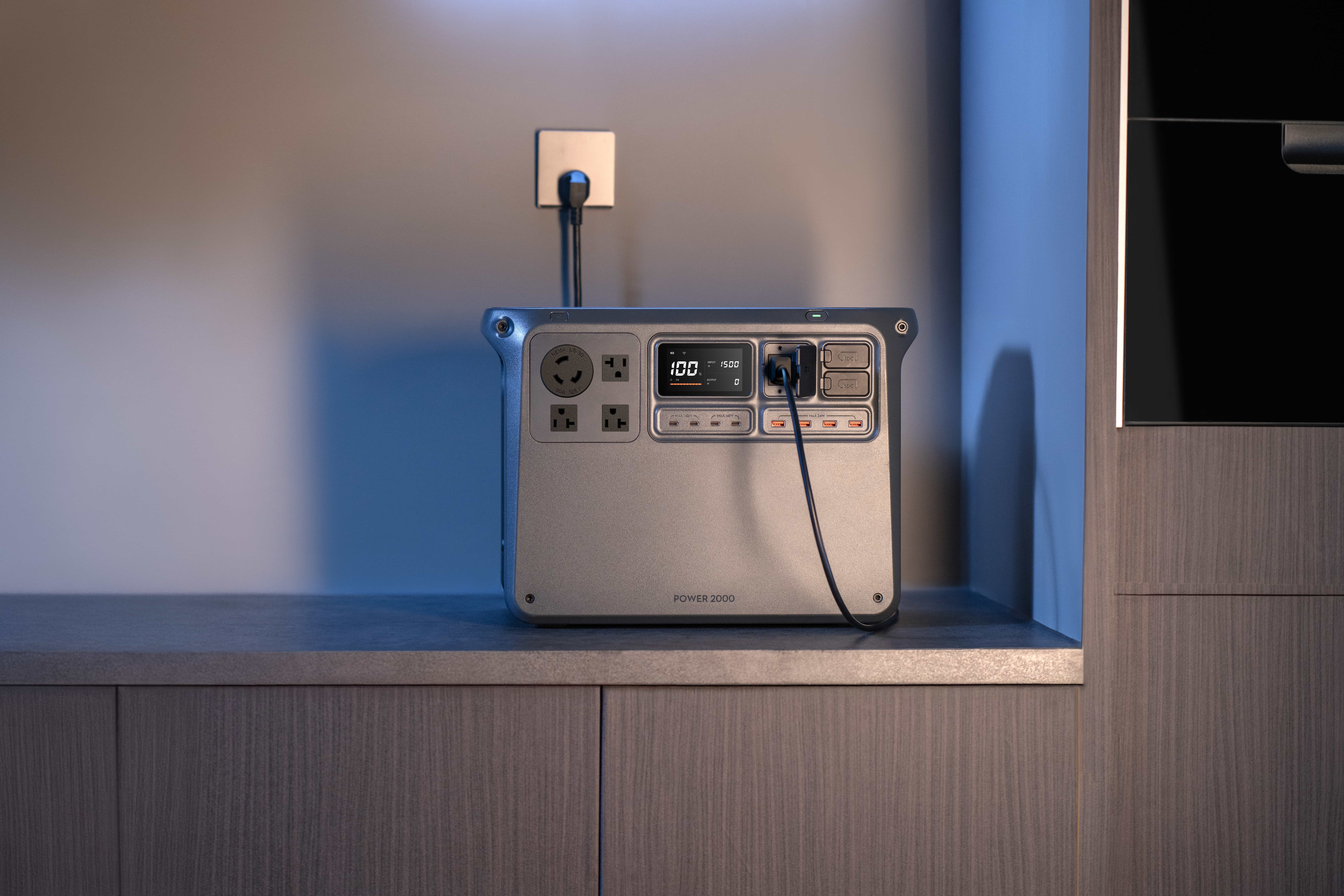
DJI Power 2000
Sometimes, power needs go far beyond travel or short-term projects — they extend to whole-home backup, film production, or extended off-grid living. The DJI Power 2000 brings that scale of reliability in a compact, intelligent form. With a 2048Wh capacity and a genuine 3000W continuous output, it handles everything from kitchen appliances to camera rigs without effort.
Despite its strength, the Power 2000 remains impressively portable, with a neatly integrated front panel for ports, buttons, and displays. It’s the kind of power station built for those who want professional-grade energy on demand — quiet, fast-charging, and expandable up to 22,528Wh when paired with DJI’s expansion modules.
Features
-
High 2048Wh capacity in a compact 16-inch carry-on size, ideal for car travel, RVs, and home storage.
-
3000W continuous output, capable of powering 99% of household appliances, including microwaves, cookers, and projectors.
-
Recharge to 80% in just 55 minutes with AC power, or use solar and car charging for flexible, sustainable options.
-
Expandable up to 22,528Wh, connecting up to ten 2048Wh expansion batteries for longer runtime.
-
Smart hybrid charging system that combines grid, solar, and car input — increasing efficiency while prioritizing clean energy.
-
Ultra-quiet operation and enhanced safety features with board-level sub-nano coating for long-term reliability.
-
App-based remote monitoring, offering easy control of power flow and battery health.
-
UPS mode for seamless backup — automatically powers connected devices within 0.01 seconds during an outage.
Use Cases
-
Home backup for essential appliances, routers, and lighting during power interruptions.
-
Film and TV production, supporting heavy equipment and lighting rigs throughout long shoots.
-
Extended RV trips or off-grid living, where quiet operation and long runtime make all the difference.
-
Workshops and DIY projects, running power tools or electronics without dependence on wall sockets.
-
Content creation setups needing uninterrupted power for drones, cameras, and laptops during travel.
DJI Power 1000
When traveling with multiple devices or working outdoors, you need a reliable solar generator that feels steady and simple to manage. The DJI Power 1000 was built for extended workdays, creative projects, or family backup power. It carries serious capacity without losing portability.
Many users notice how its quick charging time reduces waiting, and its quiet presence feels reassuring in a busy setup. It’s the kind of unit you can take anywhere, confident it will deliver steady power without issues.
Features
-
80% recharge in under 50 minutes, ideal for urgent top-ups before heading out.
-
Safe LiFePO₄ cells built for long service life under repeated charge cycles.
-
Multiple output ports are designed to support laptops, drones, cameras, and smaller appliances together.
-
Smart digital display gives live monitoring of remaining power and charging efficiency.
-
The dual input system accepts solar and car charging, adding flexibility for mobile use.
Use Cases
-
All-day outdoor shoots need lights, drones, and laptops charged continuously without interruptions.
-
Home office backup power when storms or outages threaten productivity and comfort.
-
A portable power hub for travel, keeping multiple devices alive across different environments.
DJI Power 500
There are times when you want a lighter station, something you can carry without thinking twice. The DJI Power 500 gives that option. It still uses LiFePO₄ chemistry, meaning you are not trading safety for size.
Perfect for shorter trips, weekend adventures, or small households needing emergency backup. Many creators appreciate that it fits easily into a car trunk or RV without taking up too much space. A good example of balancing efficiency and portability, this smaller solar generator still covers most needs.
Features
-
Portable and lightweight body that fits easily into vehicles, tents, or small storage spaces.
-
Long-lasting LiFePO₄ battery chemistry designed for stability and extended lifespan.
-
Quick recharge ability for fast turnaround between outdoor sessions or daily tasks.
-
Multiple device output options covering USB, AC, and other common connections.
-
Integrated smart monitoring screen to track real-time usage and remaining capacity.
Use Cases
-
Weekend trips where you need lights, phones, or cameras powered without stress.
-
Drone and camera charging sessions outdoors, giving creators a smooth production flow.
-
Emergency household backup during power outages for essentials like routers and small lights.
DJI 1800W Solar/Car Charging Combo
Sometimes, power demand is high, and charging speed becomes the top priority. That is when the DJI 1800W solar and car charging combo shines. Built for speed and flexibility, it ensures your generator can recover quickly even during heavy use.
Road travelers or field workers notice how it shortens downtime and adds peace of mind. This system handles higher loads with intelligent balancing, so devices charge efficiently without making the user constantly check screens. It is rugged and ready for long days.
Features
-
Accepts both solar and car input together, speeding up the recharging process dramatically.
-
Strong 1800W output supports larger appliances without losing stability or flow.
-
Rugged build designed for field use, durable against bumps, and outdoor handling.
-
Intelligent load balancing ensures smooth operation across different charging demands.
-
Compatible with DJI expansion modules for scaling capacity as needs grow.
Use Cases
-
Road expeditions where charging speed and flexibility are critical for multiple devices.
-
Remote film sets need stable power for cameras, monitors, and lighting equipment.
-
Off-grid workshops require a steady supply of tools and backup systems.
Expansion Modules
Even with large stations, you may still want extra capacity for peace of mind. Expansion modules give that without complicating the system. They connect smoothly with DJI Power units, making the setup stronger for longer trips, family use, or professional projects.
Instead of pushing one station too hard, you share the load across connected packs. This reduces wear, adds runtime, and keeps everything flowing. Travelers or field crews notice how much easier it becomes to plan longer sessions when expansion is available.
Features
-
Chainable expansion packs link directly to the DJI Power systems for more capacity.
-
Safe LiFePO₄ chemistry provides dependable stability under extended charging cycles.
-
Balanced integration ensures consistent power without stressing the main unit.
-
Compact design makes it easy to carry and store between locations.
-
Reliable capacity scaling adapts to changing needs across travel or professional work.
Use Cases
-
Multi-day expeditions with gear needing consistent charging across remote areas.
-
Large family backup during outages, where extra capacity prevents power loss.
-
Continuous professional shoots that demand uninterrupted energy flow across equipment
Smarter Charging, Longer Life
Good battery care comes from consistent habits, not one-time fixes. Avoid deep drains, store at mid-level, cool before charging, and use the right tools. DJI designs its solar generators with these practices in mind, but human awareness makes the difference. The reward is simple: years of steady power without sudden failures.
Ready to trust your power station longer? Explore DJI’s solar generator solutions and charge smarter today.
FAQs
1. How long does a DJI solar generator battery last?
With the right care, the battery remains dependable for many years of regular use across different conditions.
2. What is the safest way to store a solar generator?
Keep the unit in a cool, dry space with the charge resting at a mid-level range for stability.
3. Can I charge and use a DJI generator at the same time?
Yes. For best efficiency, avoid heavy simultaneous loads. Small electronics during charging are fine.
4. Why are DJI batteries different from older models?
They use LiFePO₄ chemistry, known for safety, stability, and long life compared to lithium-ion or lead-acid options.
5. How do I improve solar charging efficiency?
Correct panel angle, clean surfaces, MPPT controllers, and charging during cooler hours all improve efficiency.