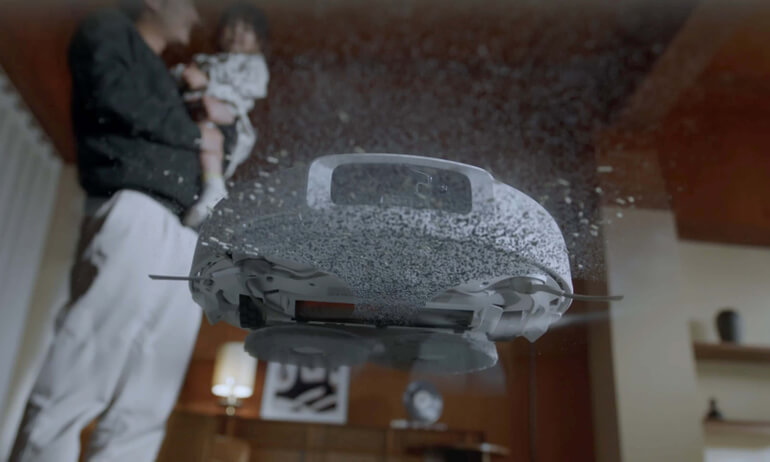
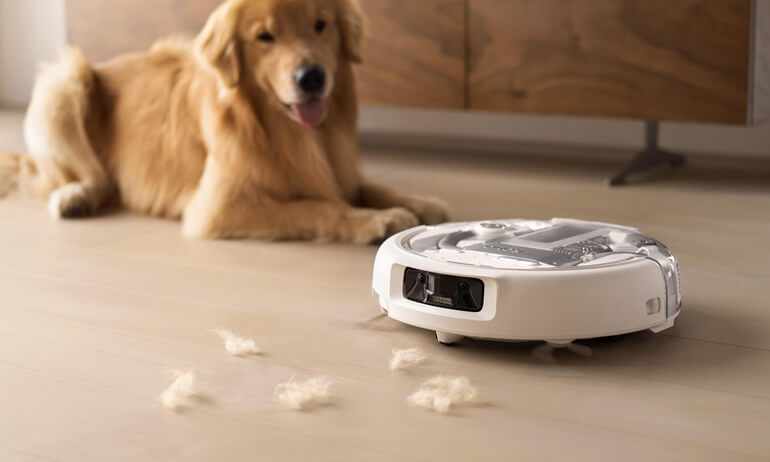
Robot Vacuum vs. Cordless Vacuum: Why Your Home Needs Both | DJI ROMO Official
Robot vacuum technology has evolved from a futuristic novelty into a cornerstone of modern home infrastructure. What once seemed like a gadget for tech enthusiasts has become a practical tool for maintaining cleaner, healthier homes with far less effort.
Yet one question continues to come up among homeowners who already own modern cleaning equipment:
If I already have a powerful cordless stick vacuum, do I really need a robot vacuum as well?
At first glance, both machines appear to serve the same purpose—cleaning floors. However, the reality is more nuanced. Robot vacuums and cordless vacuums are designed for different cleaning roles, and understanding their differences can dramatically change how efficiently your home is maintained.
In this guide, we will explore:
-
What robot vacuums actually do
-
What cordless vacuums are best at
-
The real differences between the two
-
When one tool outperforms the other
-
Why many modern homes benefit from using both together
By the end of this article, you will have a clear understanding of whether a robot vacuum, a cordless vacuum, or a combination of both is the best solution for your home.
What Is a Robot Vacuum?
A robot vacuum is an autonomous floor-cleaning device designed to clean surfaces with minimal human intervention. Using sensors, mapping technologies, and navigation algorithms, these devices can move around your home, avoid obstacles, and systematically clean large areas of flooring.
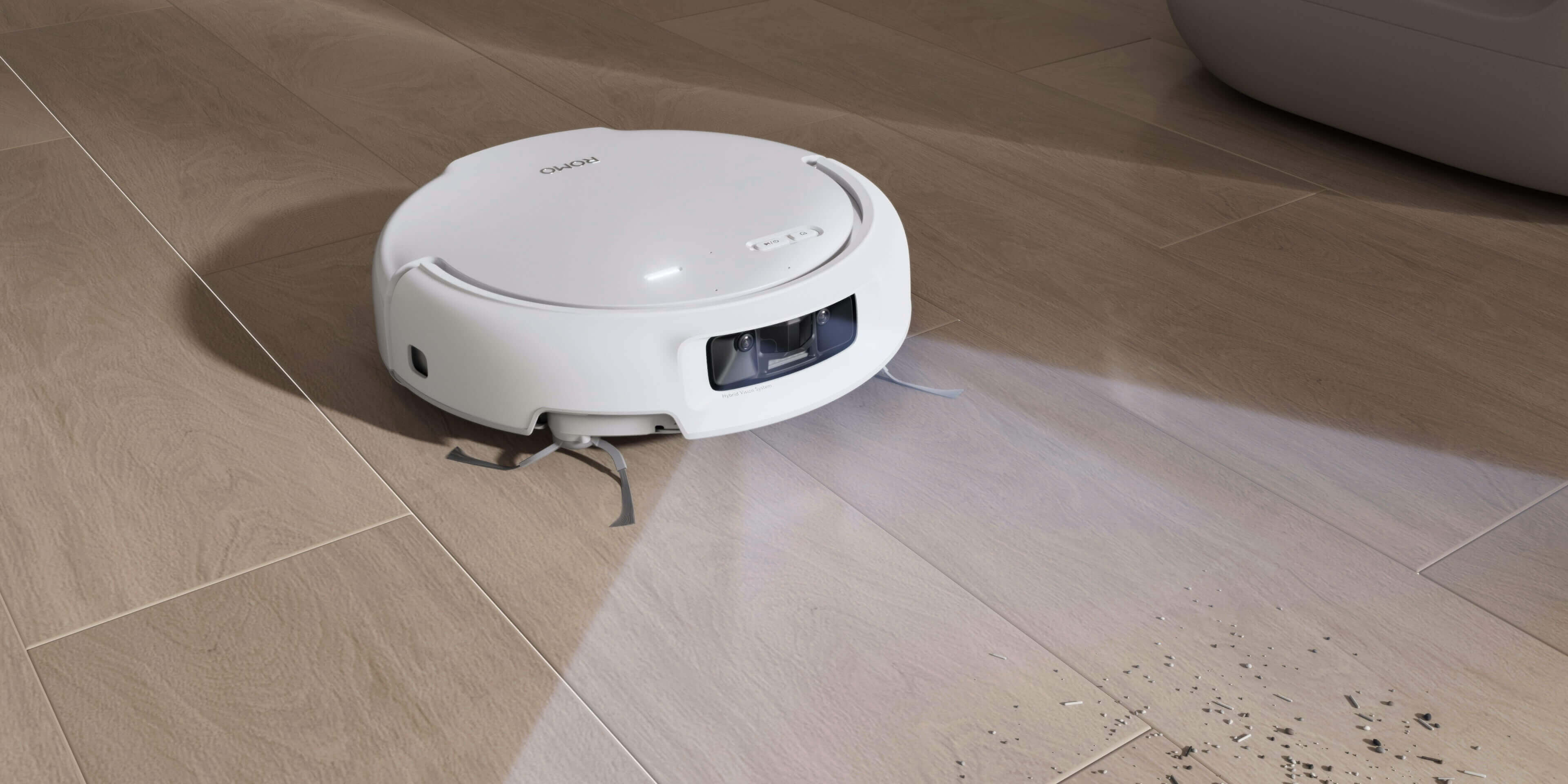
Modern robot vacuums often include technologies such as:
-
SLAM mapping (Simultaneous Localization and Mapping)
-
Laser or camera-based navigation
-
Smart home integration
-
App-based scheduling
-
Automatic charging
-
Multi-room cleaning
Rather than acting as a traditional cleaning tool used occasionally, robot vacuums are designed to operate frequently and automatically.
Instead of waiting for dust to accumulate before vacuuming, the robot vacuum removes debris daily, preventing buildup before it becomes visible.
This shift from reactive cleaning to proactive cleaning is what makes robotic vacuums such a transformative technology.
Advantages of Robot Vacuum: The Infrastructure of Clean
Robot vacuum cleaners represent the infrastructure layer of home hygiene.
If we compare home cleaning to a security system, a cordless vacuum is like a response team—used when something happens. A robot vacuum, on the other hand, is like a daily patrol system that constantly keeps things under control.
Robot vacuums address foundational cleaning challenges that manual tools struggle to solve consistently.
True Hands-Free Operation
Perhaps the most obvious advantage is automation.
You simply schedule the device to clean at a specific time each day. The robot begins cleaning automatically, navigates through rooms, returns to its charging dock, and prepares for the next cycle.
For busy professionals, families with children, or pet owners, this automation can reclaim several hours per week that would otherwise be spent vacuuming.
Accessibility Under Furniture
Many areas of the home are rarely cleaned because they are difficult to reach.
Common examples include:
-
Under beds
-
Beneath sofas
-
Under dining tables
-
Behind cabinets
Because robot vacuums are designed with low profiles, they can glide under furniture where traditional vacuum cleaners cannot easily reach.
This allows dust and debris to be removed from areas that might otherwise remain untouched for months.
Systematic Coverage
Human vacuuming tends to be inconsistent. When people clean manually, they often miss areas unintentionally or skip sections that look clean.
Robot vacuums rely on systematic navigation patterns. Using mapping technology, they divide rooms into zones and clean in structured paths.
This ensures that every section of the floor is covered.
Improved Air Quality
Frequent cleaning reduces the amount of dust circulating in the air. When floors remain clean daily, fewer particles are disturbed and lifted into the air during everyday activities.
For households with allergy sufferers or pets, this consistent cleaning can contribute to noticeably better indoor air quality.
What Is a Cordless Vacuum?
Cordless vacuum cleaners represent one of the most significant innovations in vacuum design over the last decade.
Traditional vacuum cleaners were limited by power cords, which restricted movement and made quick cleaning inconvenient. Cordless models removed this limitation by introducing battery-powered operation.
Today’s cordless vacuums are known for being:
-
Lightweight
-
Highly maneuverable
-
Powerful for their size
-
Easy to store
-
Versatile with attachments
These characteristics make cordless vacuums extremely popular for quick, targeted cleaning tasks.
Instead of pulling out a large vacuum cleaner and plugging it in, users can grab a cordless vacuum and clean a mess within seconds.
Cordless Vacuum: The Tactical Special Forces
Cordless vacuums are best understood as precision cleaning tools.
They excel at situations where quick response and flexibility are required.
Instant Spot Cleaning
When something spills on the floor, waiting for a robot vacuum to start a cleaning cycle may not be practical.
Cordless vacuums allow users to clean up messes immediately.
Common examples include:
-
Crumbs after cooking
-
Pet hair accumulation
-
Spilled coffee grounds
-
Dirt tracked in from outside
Vertical Cleaning
Robot vacuums are designed primarily for floors. Cordless vacuums, however, can clean vertical surfaces and elevated areas.
With the right attachments, users can clean:
-
Curtains
-
Ceiling corners
-
Air vents
-
Wall edges
Upholstery and Furniture
Cordless vacuums also work well for cleaning:
-
Sofas
-
Armchairs
-
Mattresses
-
Car interiors
These surfaces require manual precision that robot vacuums cannot provide.
Complex Terrain
Certain areas of the home remain difficult for robot vacuums to navigate.
Examples include:
-
Stairs
-
Tight corners
-
Small elevated platforms
Cordless vacuums provide the flexibility needed to clean these locations.
The Limits of Manual Labor
Despite their versatility, cordless vacuums are not perfect replacements for robotic cleaning systems.
Several limitations become apparent when cordless vacuums are used as the primary cleaning method for an entire home.
Manual Effort Required
Unlike robot vacuums, cordless vacuums require continuous user involvement. The user must push, maneuver, and guide the device throughout the cleaning process.
This requires both time and physical effort.
Battery Limitations
Most cordless vacuums operate for approximately 40 to 60 minutes on standard power mode.
When switched to maximum suction mode for deep cleaning carpets, runtime can drop to 10–15 minutes.
For large homes, this often means cleaning must be done in multiple sessions.
Under-Furniture Limitations
Cleaning beneath large beds or deep furniture can be difficult with stick vacuums.
In many cases, the dust bin or handle prevents the vacuum head from reaching the center area under the furniture.
Human Error
Manual cleaning relies on visual detection. If the user misses a spot or forgets a room, the dirt remains.
Robot vacuums reduce this problem by relying on mapping algorithms instead of human attention.
Cleaning Pain Points: The Invisible War on Your Floors
Many homeowners underestimate how quickly dust accumulates inside a house.
Research suggests that the average six-room home can accumulate around 40 pounds of dust annually.
This dust includes:
-
Outdoor dirt
-
Skin cells
-
Textile fibers
-
Pet dander
-
Pollen
In larger homes, maintaining cleanliness becomes an ongoing challenge.
The Frequency Problem
Keeping floors perfectly clean often requires daily maintenance.
However, vacuuming an entire home manually can take 45–60 minutes.
Over a year, this represents dozens of hours spent on repetitive cleaning tasks.
Automation helps eliminate this burden.
The Hidden Dust Problem
Dust does not only accumulate in visible areas.
It often gathers in places that are difficult to reach manually, such as:
-
Beneath beds
-
Behind sofas
-
Along baseboards
-
Under cabinets
These areas can become long-term dust reservoirs if not cleaned frequently.
Robot vacuums help address this issue by reaching spaces that humans rarely clean consistently.
Robot Vacuum or Cordless Stick Vacuum: Which Is the Best for You?
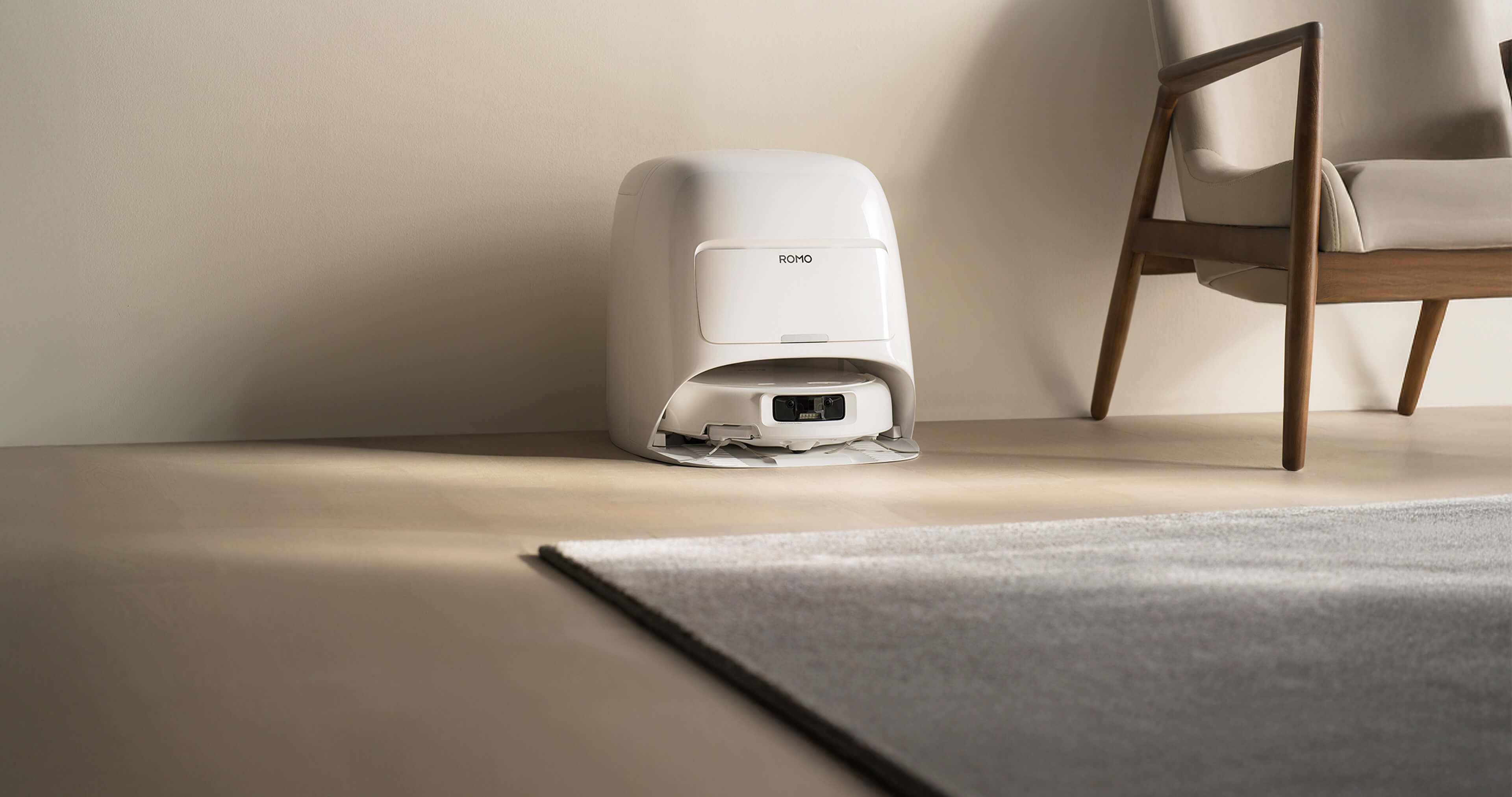
Choosing between the two devices depends on several key factors.
Ease of Use
Robot vacuums require almost no physical effort. Once scheduled, they clean automatically.
Cordless vacuums require manual operation but provide immediate control.
Performance
Cordless vacuums often deliver stronger short-term suction power, especially for deep carpet cleaning.
Robot vacuums rely on consistent cleaning frequency rather than extreme single-session power.
Cost
Robot vacuums often involve higher initial investment because they include navigation technology and automation systems.
Cordless vacuums vary widely in price but typically cost less than advanced robot models.
Adaptability
Cordless vacuums are more adaptable for non-floor surfaces.
Robot vacuums are optimized for open floor plans and large areas.
Noise Level
Robot vacuums often operate at moderate noise levels since they run frequently.
Cordless vacuums can become louder when operating at high suction power.
Battery Life
Robot vacuums recharge automatically and resume cleaning when necessary.
Cordless vacuums rely entirely on manual charging.
Smart Features
Robot vacuums may include mapping, obstacle detection, room segmentation, and voice assistant integration.
Cordless vacuums generally do not include advanced navigation technologies.
Maintenance
Both devices require basic maintenance such as cleaning filters and emptying dust bins.
Robot vacuums may also require occasional brush and sensor cleaning.
Quick Comparison
| Feature | Robot Vacuum | Cordless Vacuum |
|---|---|---|
| Primary Role | Maintenance cleaning | Spot cleaning |
| User Effort | Minimal once scheduled | Fully manual operation |
| Best Areas | Large floor areas, under beds, sofas, and furniture | Stairs, upholstery, corners, and car interiors |
| Cleaning Style | Scheduled automation with systematic coverage | Immediate response and manual control |
| Cleaning Frequency | Ideal for daily or routine cleaning | Used occasionally or when needed |
| Navigation | Uses sensors or mapping technology to move automatically | Guided entirely by the user |
| Coverage | Designed to cover entire rooms consistently | Depends on where the user cleans |
| Accessibility | Low-profile design reaches under furniture easily | Limited reach under low furniture |
| Portability | Moves independently within mapped areas | Lightweight and easy to carry anywhere |
Robot Vacuum vs. Cordless Vacuum: The Synergy
Instead of choosing between robot vacuums and cordless vacuums, many households benefit from using both tools together. Although they are often compared as competing devices, they are actually designed to solve different types of cleaning tasks within a home.
Robot vacuums focus on automated daily floor maintenance, keeping dust, pet hair, and small debris under control without requiring much effort from the user. Cordless vacuums, on the other hand, are ideal for quick and targeted cleaning, allowing you to immediately deal with spills, crumbs, or dirt in specific areas.
When used together, these two devices create a more efficient cleaning routine: the robot vacuum maintains everyday cleanliness, while the cordless vacuum handles detailed and unexpected cleaning situations.
Two Layers of Home Cleaning
Home cleaning can generally be divided into two complementary categories, which explains why robot vacuums and cordless vacuums work well together.
Maintenance
Robot vacuums handle the majority of daily floor cleaning. By running automatically on a schedule, they continuously remove dust, crumbs, and pet hair before these particles accumulate. This helps maintain a consistently clean environment with minimal effort from the homeowner.
Management
Cordless vacuums handle unexpected messes and specialized cleaning tasks. They are ideal for quickly cleaning spilled food, removing dirt from stairs, or vacuuming furniture and tight spaces where robot vacuums cannot reach.
By combining automated maintenance cleaning with manual precision cleaning, households can create a more balanced and efficient cleaning routine.
Introduction of DJI ROMO: The Pinnacle of Robotic Engineering
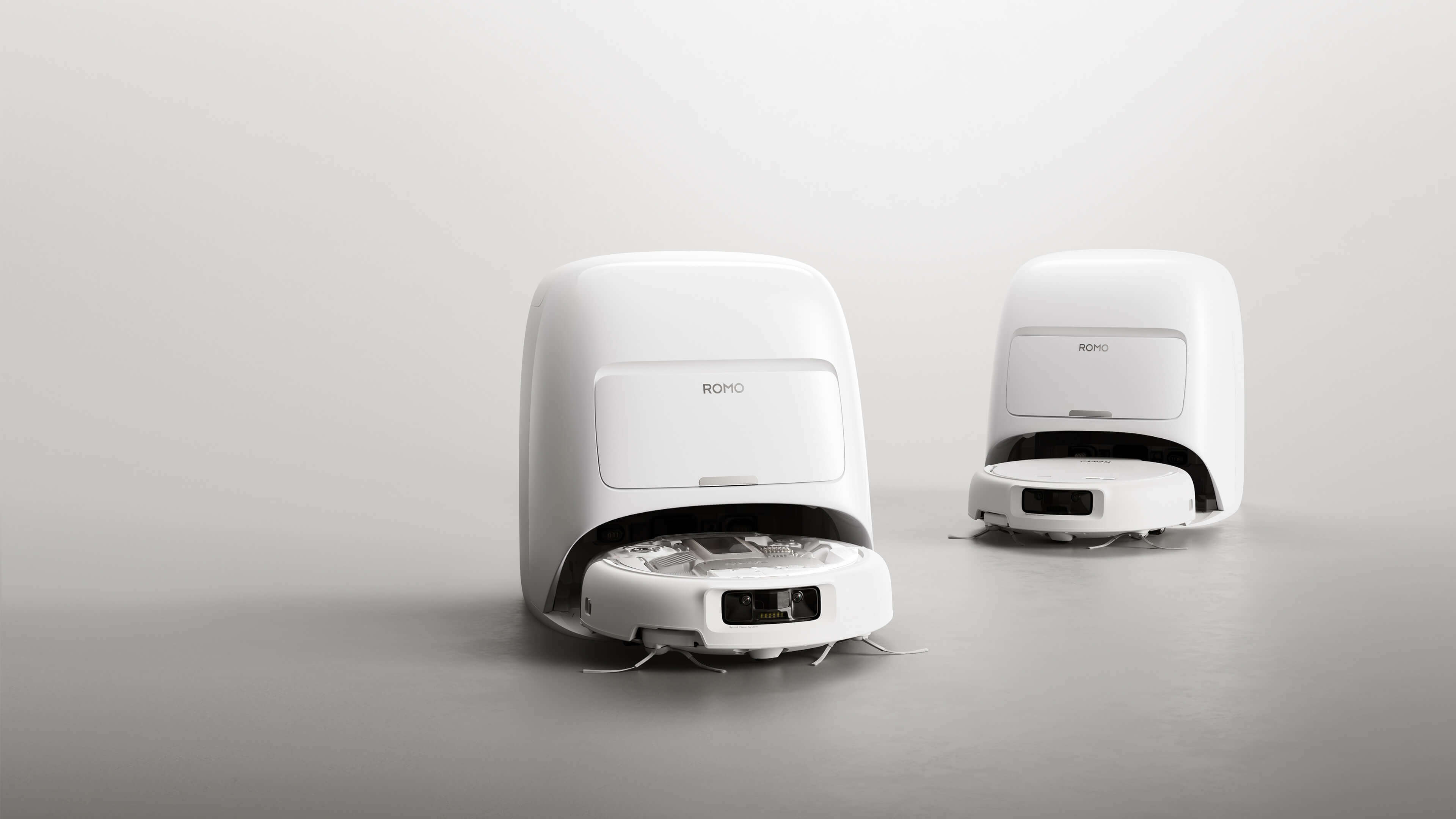
DJI ROMO represents a new approach to robotic cleaning design.
Drawing from DJI’s experience in precision motors and robotics engineering, the ROMO series introduces powerful suction performance combined with advanced automation features.
With 25,000 Pa suction power, the ROMO lineup aims to deliver deep cleaning performance comparable to traditional corded vacuums.
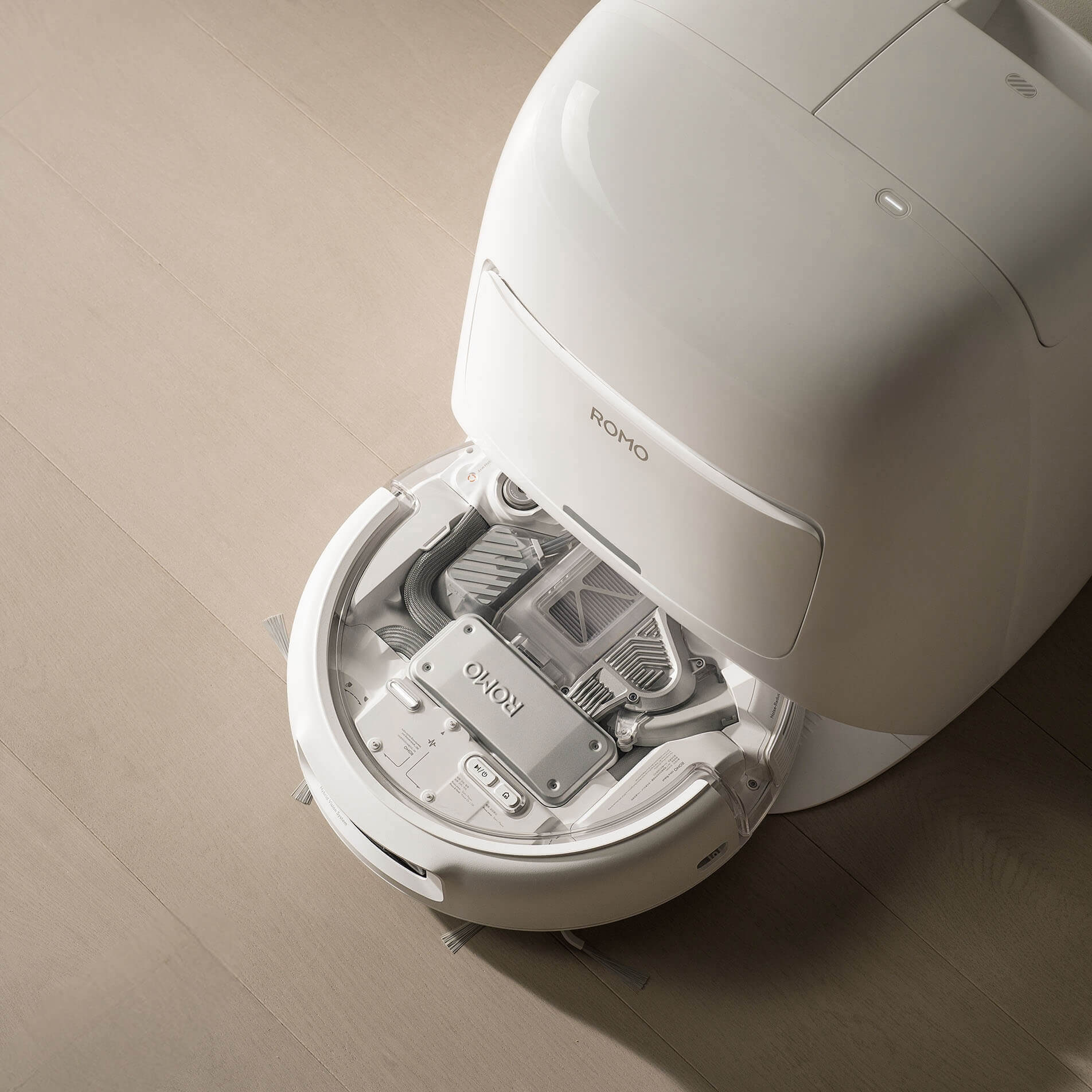
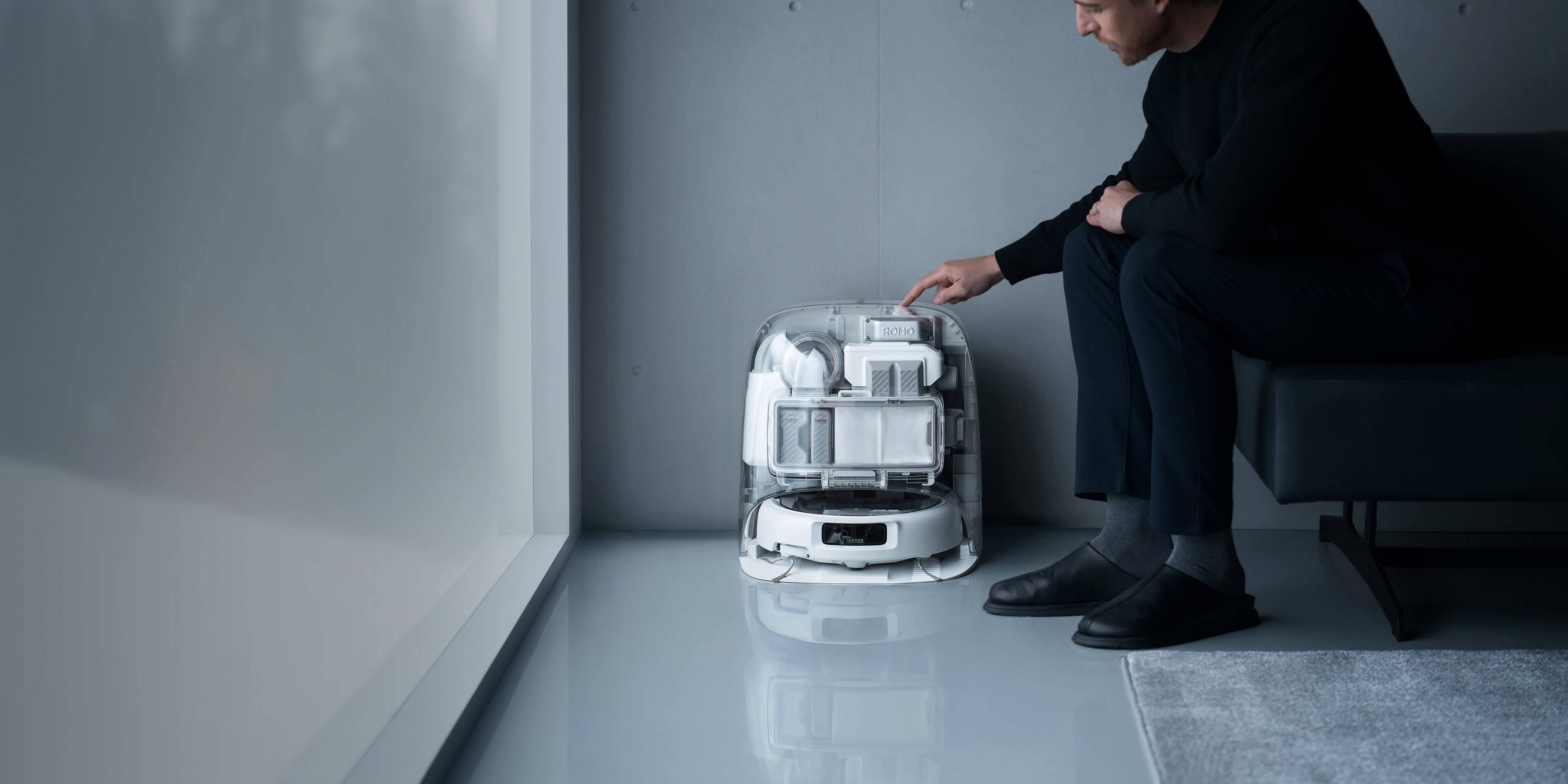
The series also introduces a transparent technology design, allowing users to visually appreciate the engineering inside the machine.
The ROMO Product Lineup: Clarity in Cleaning
ROMO S – The Pure Standard
Appearance: Classic minimalist white
Best for: Minimalist homes that prioritize performance and simplicity.
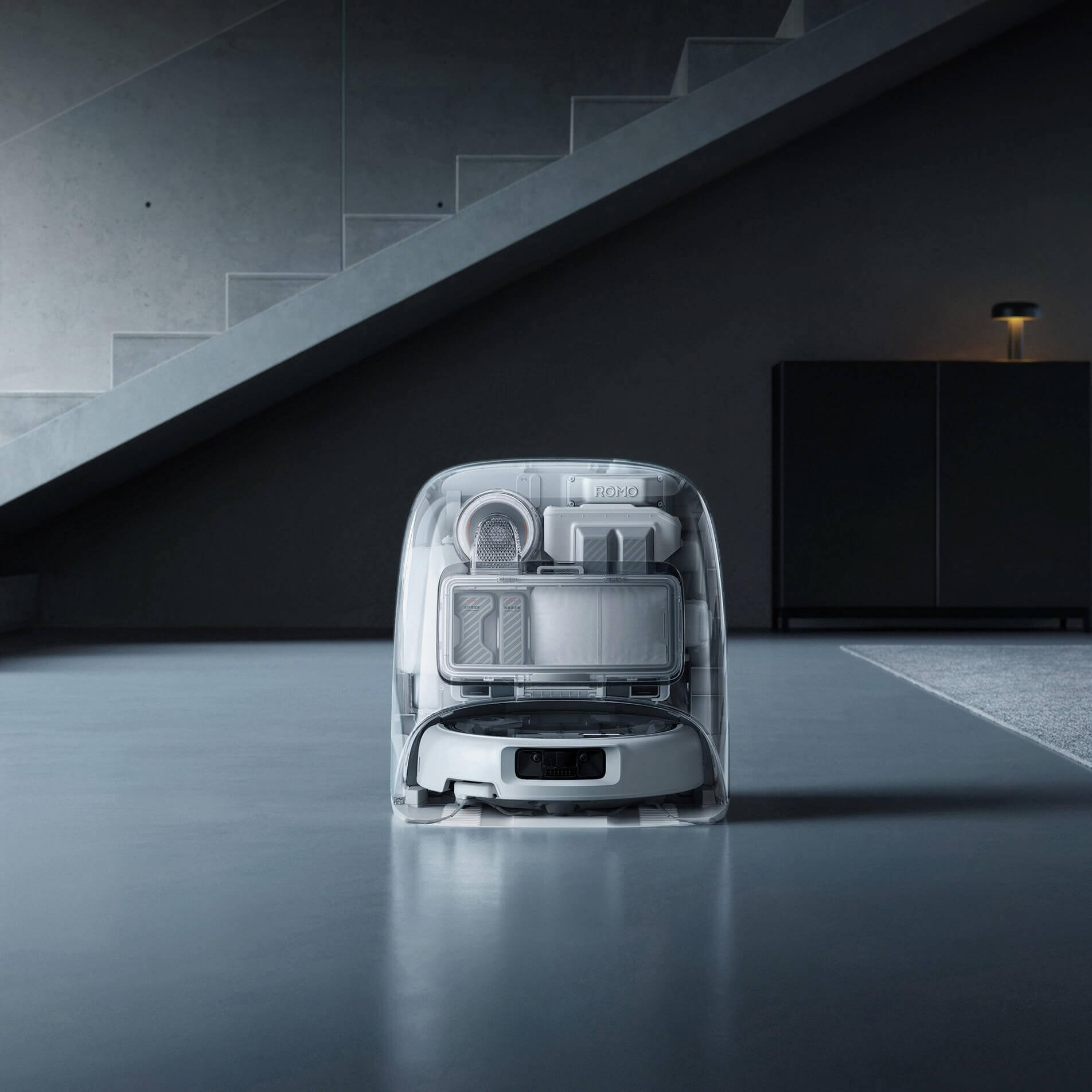
The ROMO S features the full 25,000 Pa HyperSuction motor and a standard all-in-one base station.
ROMO A – The Industrial Art
Appearance: Transparent chassis
Best for: Technology enthusiasts and design-focused homes.
The transparent body reveals internal mechanical components, creating a visually distinctive product.
ROMO P – The Hygienic Flagship
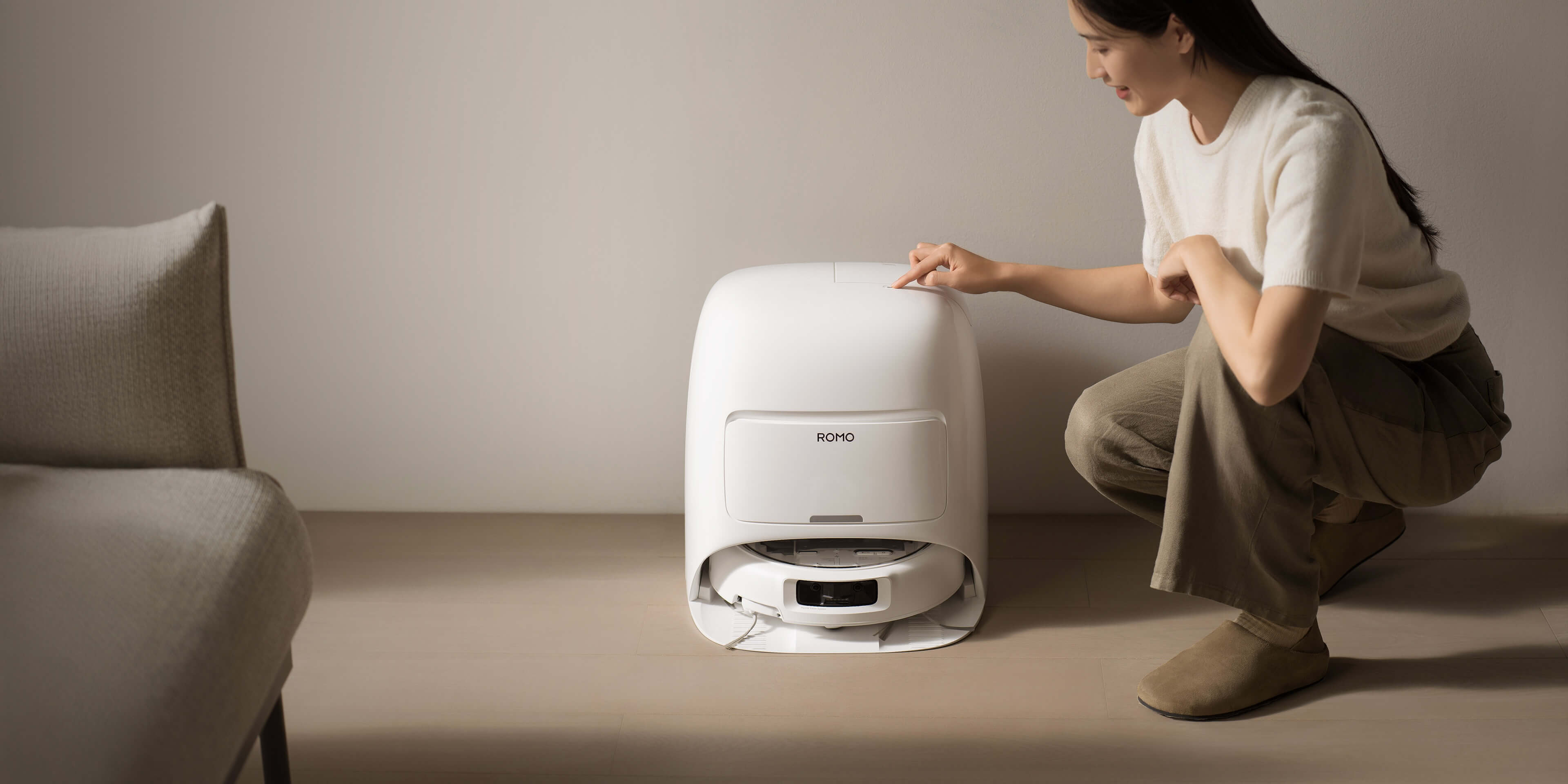
Appearance: Transparent chassis
Best for: Pet owners and families concerned with hygiene.
The P model includes the Health-Guard Base Station, featuring:
-
UV sterilization
-
Auto deodorizing system
Compare Models at a Glance
| Feature | ROMO S | ROMO A | ROMO P |
|---|---|---|---|
| Best For | Minimalist Homes | Tech Enthusiasts | Pet Owners |
| Chassis | White | Transparent | Transparent |
| Suction Power | 25,000 Pa | 25,000 Pa | 25,000 Pa |
| Base Station | Standard | Standard | Health-Guard |
| UV Light | No | No | Yes |
| Auto Deodorizer | No | No | Yes |
| Battery Life | 3 Hours | 3 Hours | 3 Hours |
FAQs
Which is better for pet hair: robot vacuum or stick vacuum?
For pet owners, the robot vacuum is the champion of consistency, while the stick vacuum is essential for deep cleaning versatility.
The main challenge with pet hair is its constant accumulation. A robot vacuum is the ideal solution for daily floor maintenance. It acts as a preventative measure, running automatically to collect fur before it settles into carpets or forms tumbleweeds. Modern robots with tangle-free rubber brush designs are particularly effective at handling long hair without clogging, significantly reducing allergens in the home.
However, a cordless stick vacuum is necessary for targeted cleaning. Its handheld configuration allows you to remove hair from furniture, upholstery, curtains, and tight corners—areas a robot cannot physically reach.
Verdict: Use a robot vacuum as your primary defense to keep floors hair-free daily, and rely on a stick vacuum for weekly deep cleaning of non-floor surfaces.
Which is better for carpets and rugs: robot vacuum or stick vacuum?
If you want deep cleaning for carpets and rugs, a high-powered stick vacuum generally performs better than most robot vacuums, as it delivers strong, focused suction and can agitate deep-seated dirt with its brush roll. However, advanced robot vacuums with high suction (like 25,000 Pa ROMOs) are rapidly closing the gap and can easily handle surface debris, pet hair, and small particles on both carpets and rugs—completely hands-free. The choice depends on your priority: stick vacuums offer the best deep clean for tough messes, but robot vacuums provide effortless daily maintenance and can keep your carpets looking fresh with zero manual effort. For the best results, many pet owners use both: robots for daily cleaning, and sticks for occasional deep cleans.
Which is better for hardwood floors: robot vacuum or stick vacuum?
For hardwood floors, the robot vacuum is often the smarter choice due to its efficiency and gentle cleaning approach.
Hardwood floors show dust and fine debris instantly. A robot vacuum is ideal here because it automates the necessary daily sweeping. Most advanced robots use precise navigation and soft side brushes to sweep debris from edges into the suction path without scratching delicate finishes. Crucially, many premium robots now offer hybrid mopping capabilities, removing the fine layer of dust that dry vacuuming often leaves behind and leaving floors polished.
Verdict: A robot vacuum provides the consistent, gentle cleaning and mopping that hardwood floors require to look their best, all without manual labor.
Which robot vacuum is worth buying?
A robot vacuum is worth buying if it possesses the intelligence to navigate your home autonomously, ensuring the investment translates into actual saved time.
The defining factor here is Navigation Technology. A robot worth your money must feature LiDAR (Laser) Mapping or advanced vSLAM. These technologies allow the device to "see" your home and clean in systematic paths rather than bumping around randomly. If a robot constantly gets lost or misses spots, it becomes a burden rather than a helper. Additionally, a model with a Self-Emptying Station adds immense value by automating dust disposal, requiring your attention only once a month.
Verdict: Invest in a model with smart mapping. The ability to clean 100% of your floor without supervision is what makes advanced options like ROMO truly "worth it."
Wrap Up
Robot vacuums represent a shift from occasional cleaning to continuous cleanliness.
Cordless vacuums remain valuable tools for targeted tasks such as stairs, upholstery, and quick spills. However, when used together, they create a highly efficient cleaning ecosystem.
For modern households, the combination of robotic automation—exemplified by intelligent systems like ROMO—and manual precision delivers the most effective strategy for a truly pristine home.