Top Robot Vacuums for Allergies 2026: Why Power Matters
The Paradox of Spring: Sunshine and Sneezes
There is a specific, bittersweet irony to spring that every parent knows all too well. It is the season when we most want to throw open the windows, let the fresh breeze flush out the stale winter air, and watch our children play in the warming sun. Yet, for millions of families, this simple act of opening up the home feels like lowering the drawbridge to an invisible invading army.
As nature wakes up, it releases a biological storm. Pollen counts spike, mold spores multiply in the damp earth, and the simple act of walking through the front door tracks in a microcosm of the outdoors. For adults, this usually means itchy eyes, a scratchy throat, and the occasional antihistamine. But for families with crawling babies and curious pets, the stakes are significantly higher.
If you have an infant, their world is the floor. They breathe, touch, and explore within inches of the ground—exactly where gravity dictates that every heavy allergen must eventually settle. The dust mite population surges with the rising humidity, and that golden spring sunshine streaming through the window often reveals a disheartening reality: a galaxy of dust motes dancing in the air, waiting to settle on the very rug where your baby is learning to crawl.
For the modern, high-income household, the solution isn’t to clean harder—it’s to clean smarter. We are past the era where keeping a home hypoallergenic required hours of manual labor. Enter the robot vacuum cleaner. Once considered a novelty gadget for tech enthusiasts, it has matured into a sophisticated health device, a critical line of defense designed to reduce dust at home and protect the respiratory health of our most vulnerable family members without demanding a single minute of your time.
The Invisible Invasion: Why Spring Pollen Breaches Your Fortress
To understand why your standard cleaning routine fails in April and May, we have to look at the biology of the season. Spring is the reproductive season for plants, which means the air is saturated with microscopic genetic material—pollen.
Unlike winter dust, which is largely comprised of dead skin cells and fabric fibers, spring dust is biologically designed to be "sticky." Pollen grains are often evolved to adhere to surfaces (like bee legs or animal fur) so they can be transported. When these enter your home, they don't just sit on top of your hardwood floors; they latch onto rug fibers and upholstery with surprising tenacity.
The "Open Window" Effect and Micro-Drafts
We crave ventilation, but standard window screens are permeable to fine pollen. A gentle breeze can coat a living room floor in a fine yellow layer in less than an hour. Even with windows closed, "micro-drafts" through door frames and vents continue to pull outdoor air inside, creating a constant influx of particulates.
The Foot Traffic Superhighway
High-activity families are in and out of the house constantly. Every pair of shoes brings in soil bacteria, herbicides from the lawn, and heavy pollen loads. For a toddler, the entryway rug isn't just a floor covering; it's a sensory playmat, one that is teeming with everything you stepped on in the garden.
The Pet Factor: A Living Allergen Shuttle
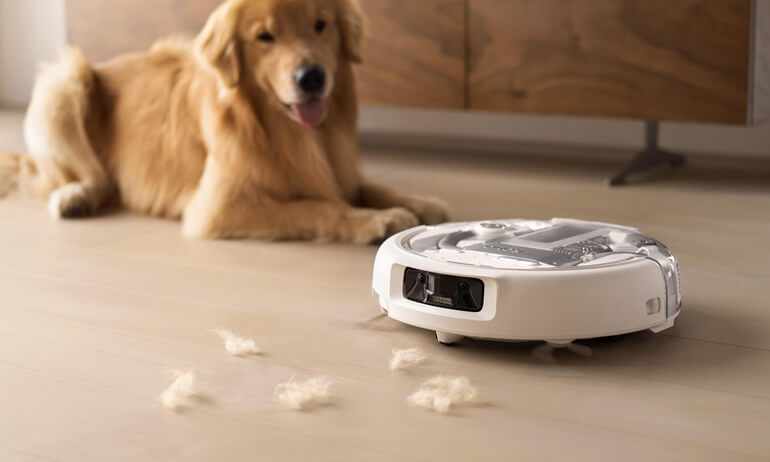
For families with dogs or cats, the challenge is compounded. Your pet is essentially a living Swiffer duster. They romp through the grass, collecting pollen on their coats and paws, and then shake it off directly into your carpet. This biological transfer happens multiple times a day, deeply embedding allergens into the fibers of your home.
This creates a cumulative effect. Dust and pollen removal becomes a battle against compound interest; if you miss a day of cleaning, the allergen load doesn't just double—it entrenches itself. For a crawling baby, this accumulation effectively turns the living room carpet into an allergen sponge.
The Manual Failure: Why Your Upright Vacuum Isn't Enough
There is a common misconception that if you have a powerful upright vacuum and a weekly cleaning service, your floors are pristine. While this might be true for visible crumbs, it is often insufficient for indoor allergens.
The "Frequency Gap" in Busy Households
The half-life of airborne dust is short; gravity pulls it down quickly. To truly maintain an allergy-free zone during peak pollen season, vacuuming needs to happen daily. For dual-income parents juggling careers, childcare, and social lives, manually vacuuming 2,500 square feet every single day is not just impractical—it’s impossible. As a result, allergens accumulate for six days until the next "cleaning day," leaving your family exposed for the majority of the week.
The Physics of Resuspension
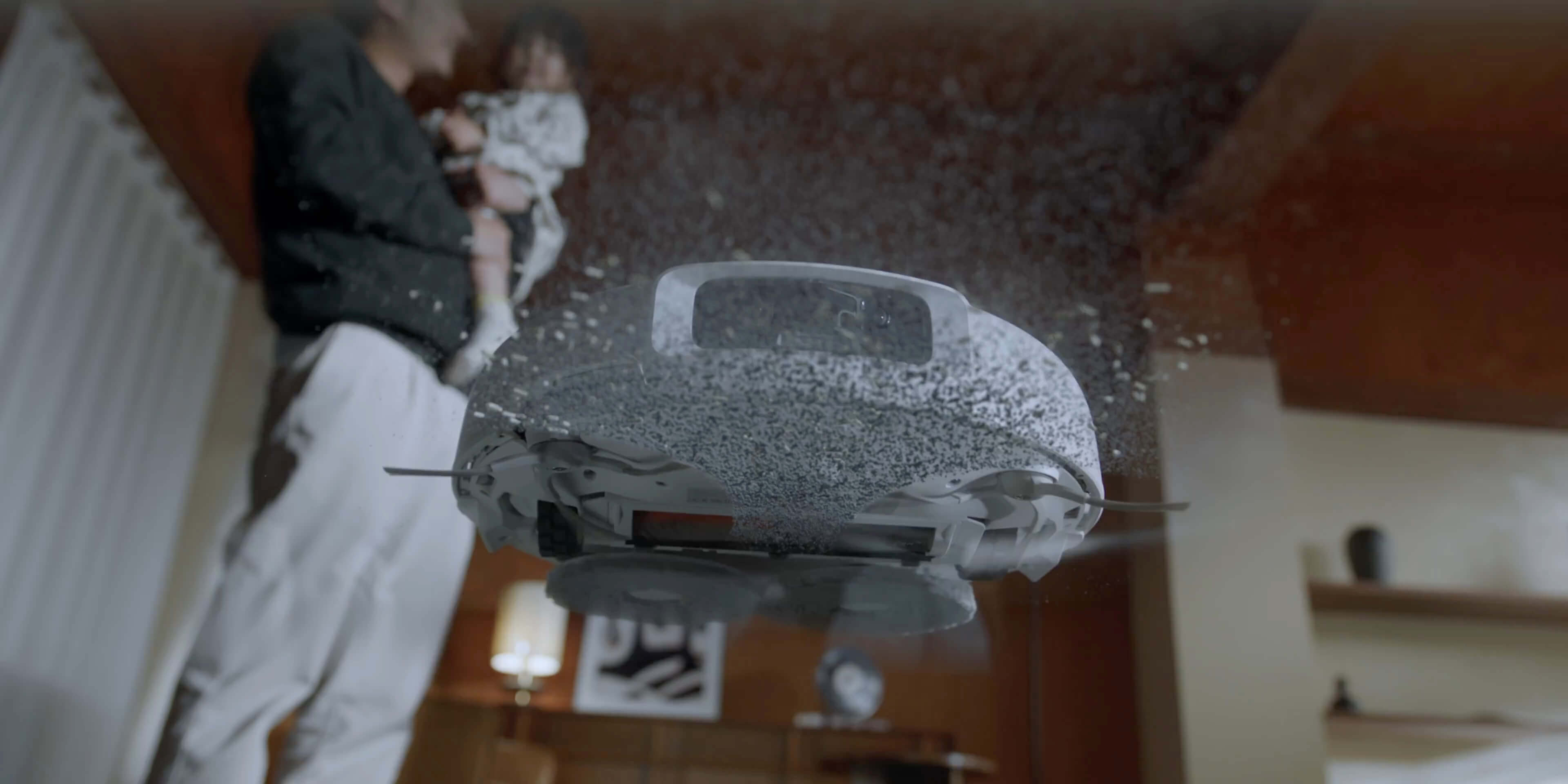
Have you ever vacuumed a sunlit room and watched a cloud of dust erupt from the exhaust or the brush head? This phenomenon is called resuspension. Many manual vacuums, especially those without perfectly sealed systems, essentially rearrange the dust. They suck up the heavy debris but blast the fine, dangerous micro-particles back into the air at hip-height—right into your breathing zone.
The Human Error Element
We are creatures of habit. We vacuum the open spaces. We rarely move the heavy sofa, the crib, or get deep under the king-sized bed every time we clean. Yet, these dark, undisturbed areas are breeding grounds for dust mites. A low-profile robot vacuum cleaner doesn't get tired, doesn't cut corners, and fits into the spaces you physically can't reach.
The Automated Defense Strategy: How Robots Change the Game
Transitioning to a robot vacuum for allergies isn't about laziness; it's about shifting from "reactive cleaning" (cleaning when it looks dirty) to "proactive maintenance" (preventing buildup entirely).
Consistency is the Ultimate Cure
The primary benefit of a robot is daily cleaning for allergy season. By scheduling the robot to run at 10:00 AM every day while the house is empty, you ensure that any pollen brought in the previous evening is removed before it can be ground deeper into the fibers. This suppresses the baseline allergen load of the house, keeping it constantly low rather than allowing it to spike between weekly cleanings.
Systematic Filtration on the Move
Modern high-end robots are no longer just sweepers; they are mobile air purifiers. Equipped with high-density filters, they trap the particulate matter that manual sweeping sends airborne. They work closer to the ground, capturing dust at the source before it has a chance to become airborne.
Intelligent Mapping and Zero-Miss Zones
Unlike the "bump-and-run" robots of a decade ago, modern Lidar and visual-navigation robots map your home with architectural precision. They clean in neat, overlapping rows. This ensures 100% floor coverage, meaning there are no "safe zones" left for pollen to hide.
Factors to Consider When Buying a Robot Vacuum for Allergies
If you are shopping for a robot vacuum for families, specifically to combat allergies, you cannot simply buy the cheapest model on the shelf. The requirements for allergy defense are stricter than simple crumb collection. You need a machine that acts as a health device.
1. Suction Power: The "Pascal" Reality Check
Pascal (Pa) is the metric used to measure suction pressure. Most standard robots hover around 4,000 to 6,000Pa. While this picks up rice and cereal, it often fails to extract fine pollen dust that hooks into carpet fibers. For allergy sufferers, you need industrial-grade power to pull particulates from the base of the carpet. You are looking for suction that rivals a corded vacuum.
2. The Intelligence of the Side Brush
This is a detail often overlooked until you own a robot. High-speed side brushes can sometimes act like propellers, flicking lightweight debris (like cat litter, dried mud, or pollen clumps) across the room rather than into the suction inlet. For a hygienic home, you need a robot intelligent enough to manage its own strength—one that knows when to spin fast and when to slow down.
3. Filtration Integrity and Sealing
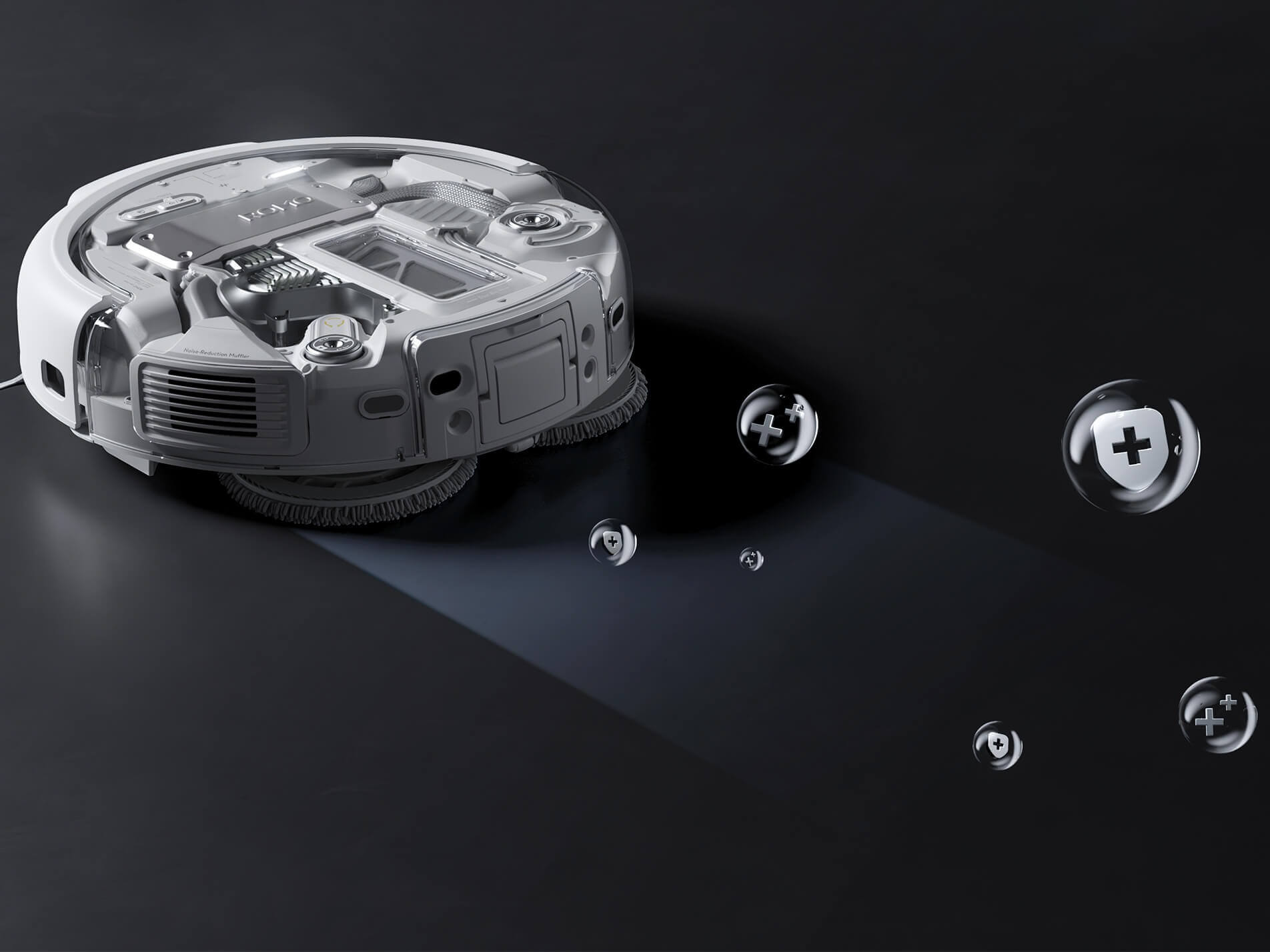
Does the vacuum keep what it catches? You need a fully sealed system. Many budget robots leak fine dust out of their exhaust vents or chassis seams. For an allergy-focused machine, the internal seal is just as important as the filter itself.
4. Hands-Free Maintenance Frequency
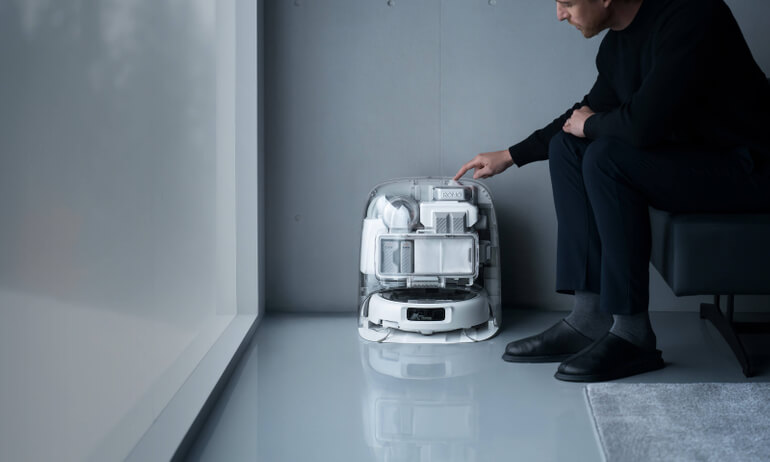
If you have to empty a dusty bin every day, you are exposing yourself to a concentrated cloud of allergens daily. A self-emptying base is not a luxury for allergy sufferers; it is a medical necessity to minimize exposure.
The Market Landscape: Types & Trade-offs
Before we look at the ultimate solution, it helps to understand the landscape of the market. Generally, robots fall into three tiers.
The Random Navigators
These are the entry-level pucks. They bounce off walls randomly until the battery dies.
-
Pros: Inexpensive.
-
Cons: They miss large patches of floor, take hours to clean, and often lack the suction to do more than surface sweeping. They are effectively useless for allergy control.
Standard Lidar/Camera Mid-Range
These robots map your home and clean in straight lines.
-
Pros: Good coverage, decent app control.
-
Cons: They often compromise on power. To preserve battery life, suction is capped at 5000-6000Pa, which leaves deep-seated dust behind. They also frequently lack advanced object recognition, meaning they drag socks, get stuck on cables, or fan cat litter across the room.
Premium AI-Driven Systems
These are the top-tier flagships designed for complex family homes. They combine mapping, obstacle avoidance, and high suction.
-
Pros: Excellent navigation and features.
-
Cons: Even among premium models, few have solved the "scatter" issue or offered maintenance periods longer than a month or two.
Why DJI ROMO is the Ultimate Choice for Families
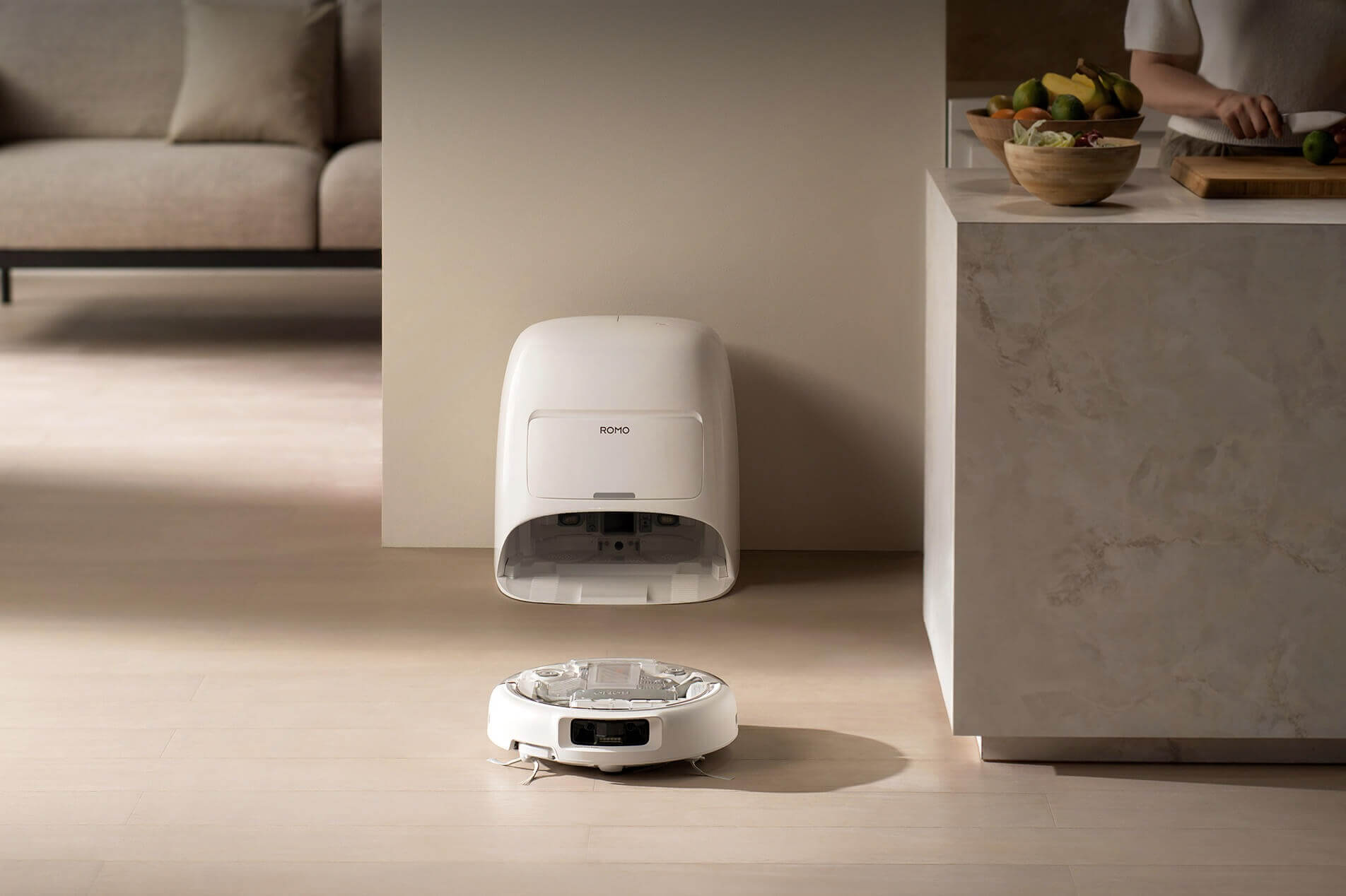
For the discerning homeowner who refuses to compromise on cleanliness, the DJI ROMO stands in a league of its own. It addresses the specific nuances of a family home—pets, toys, and deep-cleaning needs—with engineering precision that goes far beyond standard market specs.
Here is why the DJI ROMO is the definitive robot vacuum for allergies:
1. 25,000Pa Extreme Suction Power: A New Industry Standard
While the industry standard hovers between 6,000 and 8,000Pa, DJI ROMO delivers a staggering 25,000Pa suction power. This number isn't just for show; it fundamentally changes how the floor is cleaned. At 25,000Pa, the vacuum doesn't just skim the surface. It generates enough airflow to dislodge fine pollen, heavy dust mites, and dander trapped deep within high-pile rugs and carpet backing. For a baby crawling on that rug, this difference is palpable. It ensures that the floor isn't just visually clean, but clinically deep-cleaned, removing the microscopic irritants that weaker vacuums leave behind.
2. Smart Particle Identification & Anti-Scatter Technology
This is perhaps the most "thoughtful" feature for pet owners. We’ve all seen videos of robot vacuums running over cat litter or dry food and spinning it across the hard floor like shrapnel. This spreads bacteria and allergens rather than containing them. DJI ROMO utilizes advanced AI to identify granular debris (like kitty litter or cereal spills) before it hits them. Upon detection, it instantly performs a two-step maneuver:
-
Auto-Boost: It ramps suction to the maximum.
-
Side-Brush Deceleration: Crucially, it slows down the spinning side brushes. This prevents the debris from being "fanned" or flicked away. It gently guides the mess into the high-suction inlet. For parents, this means you won't find stray bits of dirty cat litter in the nursery; the robot handles it with surgical precision.
3. 200 Days of True Hands-Free Maintenance
Allergy season lasts a few months, but the DJI ROMO’s maintenance cycle lasts longer. The all-in-one self-cleaning base station is engineered with massive capacity and hygiene in mind. You can go up to 200 days without replacing the dust bag. Think about that: You can install the robot in March, and you won't have to touch a speck of dust until autumn. This completely eliminates the "puff of dust" face-blast that occurs when emptying standard bins, keeping your hands clean and your sinuses clear.
4. Safe Navigation for a Live-in Home
With babies leaving toys around and pets sleeping in hallways, you need a robot that sees the world like you do. DJI ROMO’s obstacle avoidance is sensitive enough to skirt around a sleeping cat or a forgotten pacifier without eating them, ensuring the cleaning run completes successfully every single time without your intervention.
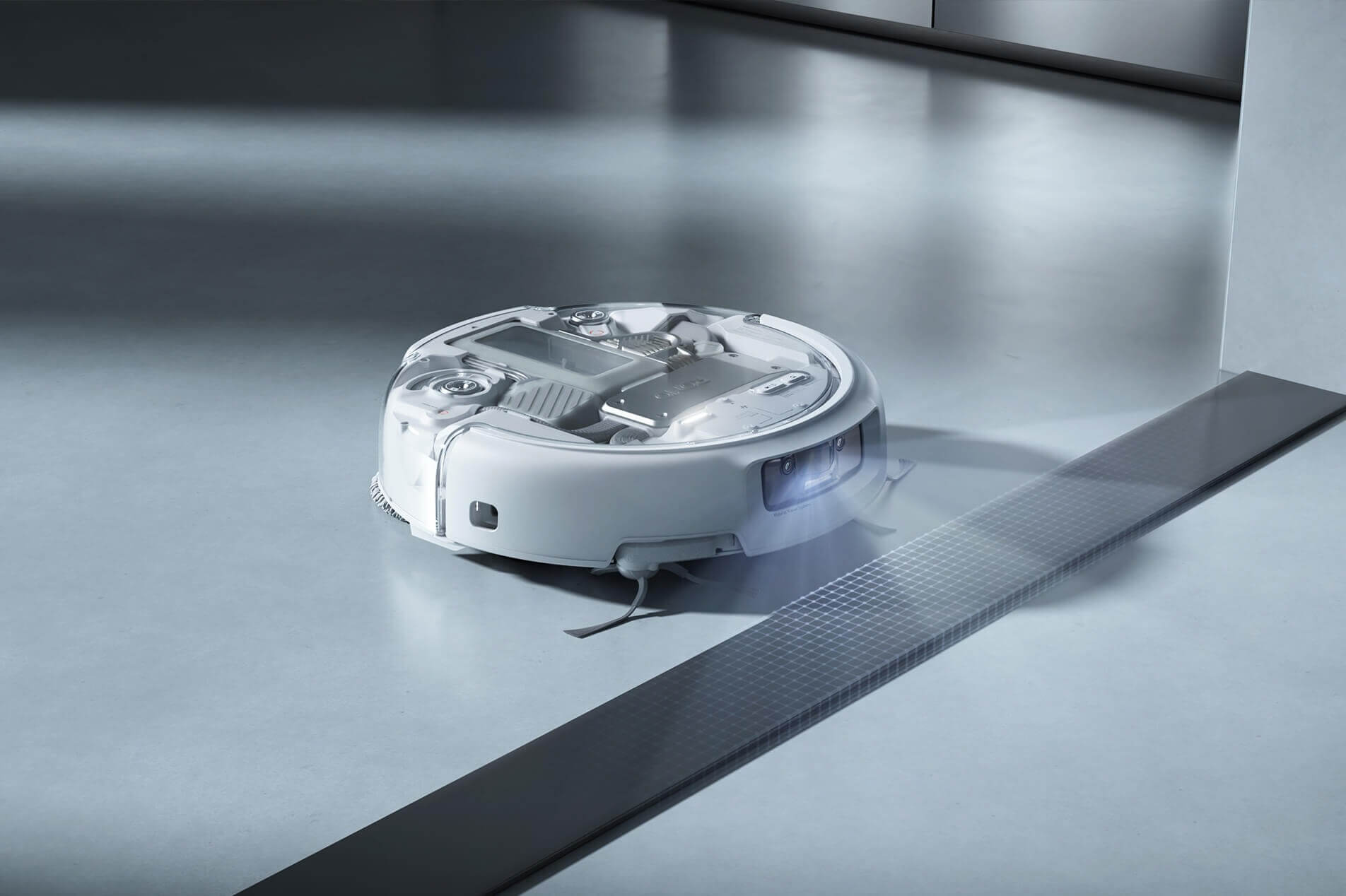
Meet the Series: Precision Engineering for Every Home
While the entire ROMO lineup shares the industry-leading 25,000Pa suction power and 3-hour long-lasting battery life, we offer three distinct editions designed to match different aesthetic tastes and hygiene requirements.
-
ROMO P (The Premium Hygiene Choice)
-
Best for: Allergy sufferers and pet owners who demand the highest sterility.
-
Distinct Feature: Comes with a striking transparent aesthetic and the advanced CS8E Base Station. The P series is the only model equipped with UV Bacteriostasis for the dust bag and support for Automatic Cleaning Solution injection, providing a hospital-grade clean for your floors and station.
-
-
ROMO A (The Design Statement)
-
Best for: Tech enthusiasts who appreciate industrial design.
-
Distinct Feature: Features the same bold transparent shell as the P series, allowing you to see the precision engineering at work. It pairs with the standard white CS8F station, offering a perfect balance of cutting-edge style and core performance.
-
-
-
Best for: Minimalist homes.
-
Distinct Feature: Finished in a timeless, elegant White, the S series blends seamlessly into modern home decor. It delivers the full cleaning power of the series with a discreet, understated profile.
-
All models feature the same compact dimensions (98mm height) to slide under low furniture and utilize the same high-capacity 4L clean water tanks for extended mopping sessions.
8 Essential Robot Vacuum Tips for Allergy Season
To get the most out of your DJI ROMO this spring, follow these actionable strategies to maximize efficiency and minimize allergens.
Rule #1: The "Golden Hour" Strategy for Scheduling
Schedule your vacuum to run mid-morning, ideally around 10:00 AM. By this time, the morning rush is over, the dust kicked up from breakfast has settled, and the house is likely empty. This ensures the robot removes the morning's influx of pollen before anyone returns home.
Rule #2: Maximize Airflow with Carpet Pressurization
Ensure you enable the "Carpet Boost" feature (which comes default on DJI ROMO). This automatically detects carpets and ramps up suction. Carpets are allergen traps; they need maximum airflow to release the sticky pollen grains clinging to the fibers.
Rule #3: The "Frequency Over Intensity" Principle
It is far better to run the robot daily on a standard setting than once a week on max mode. Consistency keeps the allergen baseline low. Think of it as maintenance, not a deep clean.
Rule #4: Strategic Zoning for Pet Hygiene
Use the app to draw "No-Go Zones" around pet water bowls to prevent wet messes, but set "Double Clean" zones around the entryway where pets come in from outside. This creates a buffer zone that stops pollen from tracking further into the house.
Rule #5: Maintain Your Filters for Peak Performance
Even with self-emptying bases, check the robot’s onboard HEPA filter monthly. If it’s clogged with fine dust, suction power drops. A clean filter ensures the machine acts as an air purifier, not just a sweeper.
Rule #6: The "Toy Sweep" Pre-Game Ritual
Before the robot runs, do a quick 30-second sweep of the floor to pick up large toys or socks. The clearer the floor, the more surface area the robot can cover. A robot that has to navigate a maze of toys misses spots; a robot with a clear path cleans 100%.
Rule #7: Don't Neglect the "Dust Mite Hotels"
Ensure your bed skirt is lifted or high enough for the robot to pass underneath. The dark, undisturbed space under the bed is the number one breeding ground for dust mites in the bedroom. Let the robot go where you can't.
Rule #8: The Mop-After-Vacuum Technique
If you have the hybrid model, run the mop immediately after vacuuming. While vacuuming removes 99% of debris, damp mopping captures the final ultra-fine micro-dust that static electricity might hold to the floor.
Frequently Asked Questions
Is a Robot Vacuum Truly Effective Against Microscopic Allergens?
Absolutely. While manual vacuums are powerful, their effectiveness is limited by human consistency. A robot's primary advantage is frequency. By cleaning daily, they suppress the population of dust mites and the accumulation of pollen, significantly reducing the overall allergen load in the home.
Which Specs Matter Most for Dust Mite Allergies?
You need high suction and sealing. A model like the DJI ROMO, with 25,000Pa suction power, is ideal because it has the sheer physical strength to pull mites from carpets rather than just skimming the surface. Combined with a sealed bag system, it ensures mites are trapped, not released.
Can the Act of Vacuuming Actually Trigger My Allergies?
With manual vacuuming, yes. The exhaust draft often kicks up dust, and emptying the bin creates a dust cloud. A self-emptying robot vacuum with a sealed station significantly reduces this risk by containing the dust for months at a time and operating when you are not in the room.
How Does the DJI ROMO Handle Cat Litter Without Scattering It?
This is a unique strength of the DJI ROMO. It uses AI visual recognition to identify granular debris like litter. Instead of spinning its side brushes at full speed (which flings litter), it slows them down and increases main suction, guiding the litter gently into the vacuum.
Do "Allergen-Specific" Vacuums Really Work?
Yes, provided they have HEPA-grade filtration. The goal is to trap particles as small as 0.3 microns (like pollen and mite waste) inside the machine. Without this filtration, a vacuum is simply a dust redistribution machine.
Wrap Up
Spring should be defined by blooming flowers and warm afternoons, not by itchy eyes and constant cleaning. The battle against indoor allergens is won through consistency and technology, not through back-breaking manual labor.
By upgrading your home defense with a specialized tool like the DJI ROMO, you are buying more than just clean floors. You are investing in air quality, safety for your crawling infant, and the peace of mind that comes from knowing your home is a sanctuary. With its industry-leading 25,000Pa suction, intelligent anti-scatter capability, and a 200-day maintenance-free lifespan, the DJI ROMO allows you to reclaim your spring.
Don't let pollen dictate your life inside your own home. Let the robot handle the dirt, so you can handle the parenting