DJI News
DJI Agriculture Reveals Global Adoption of Agricultural Drones Cuts 51Mt in Carbon Emissions and Saves 410Mts of Water for Farmers Globally
Presented at Brazil's AgriShow, New Report Highlights Maturing Industry with over 600,000 DJI Agricultural Drones Now Deployed in 100+ Countries and regions.
April 29, 2026 - DJI Agriculture, the global leader in innovative agricultural drone technology, today unveiled its fifth annual Agricultural Drone Industry Insight Report (2025/2026) at Agrishow 2026 in Ribeirão Preto, Brazil. The report highlights how global policies are trending toward liberalization, standardization, and strategic integration. Meanwhile, DJI Agriculture strengthened its network of 3,500 service and repair centers worldwide while advocating for standardized drone operations. By the end of 2025, over 600,000 DJI agricultural drones were already in use globally by more than 600,000 trained operators. The adoption of this technology has saved approximately 410 million tons of water—equivalent to the annual drinking water consumption of 740 million people—and cut carbon emissions by 51 million tons, equal to the annual carbon absorption capacity of 240 million trees.
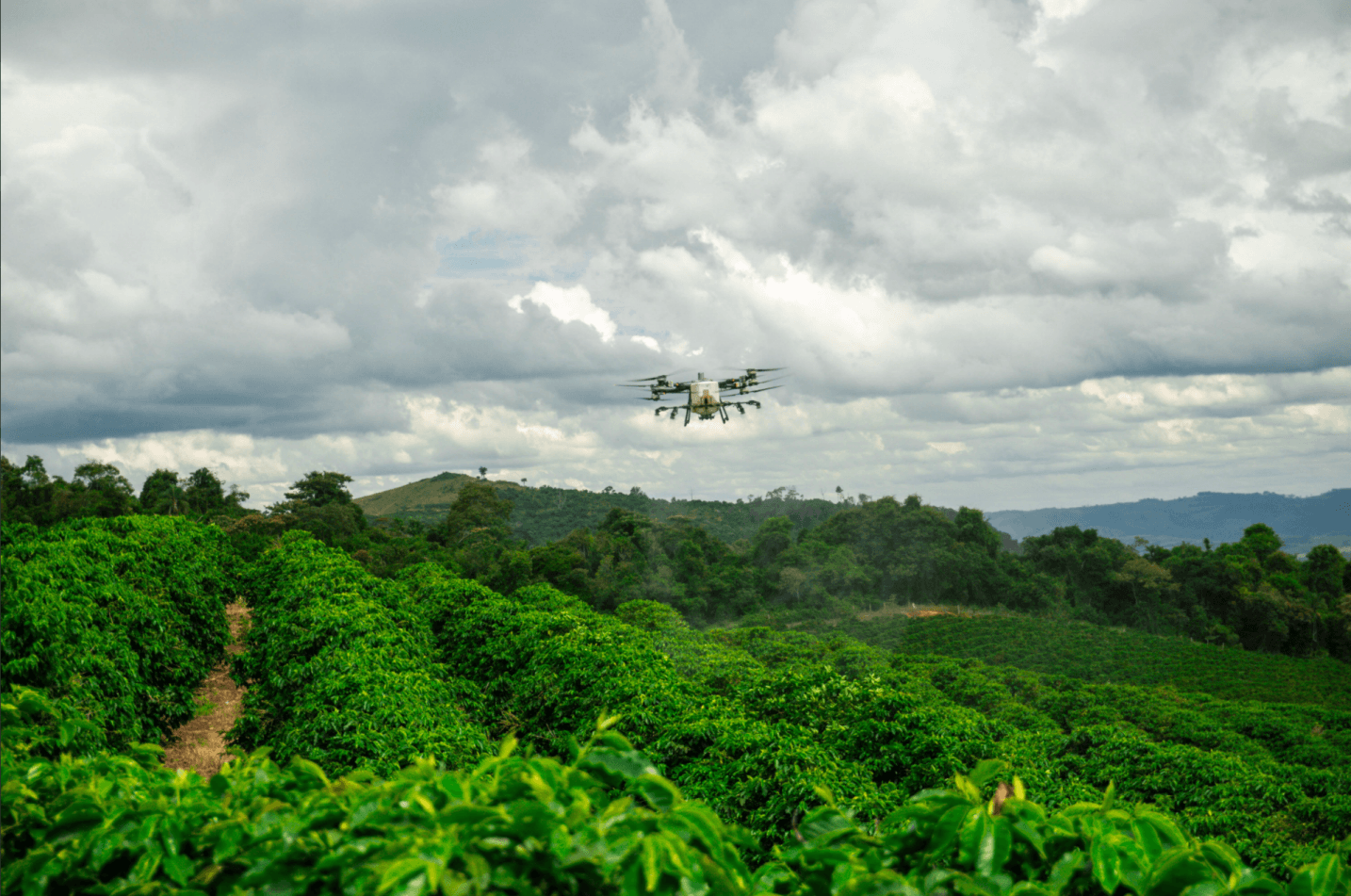
"Agricultural drones are no longer a novelty – they are essential farm equipment worldwide. In Brazil, DJI Drones are now widely applied on the country's major crops, including coffee, soybeans, corn, sugarcane, and forage grass." said from Yuan Zhang, Head of Global Sales at DJI Agriculture, "As the global adoptions continues to grow, DJI Agriculture will continue to strenghten our support network for operators while offering training through our global network of over 7,000 certified instructors. These investments underscore the company's commitment to helping farmers improve efficiency and sustainably increase their yields through innovative drone technology."
Drone Seeding and Spraying Elevates Pasture Production and Sustainability in Brazil
The report presents several case studies on the use cases of agricultural drones for various crops in different countries. In Brazil, farmers have deployed DJI Agras T25P, T70P, and T100 agricultural drones to cover full-cycle precision operations in forage management, lifting forage renewal efficiency and pasture productivity. For example, using drones to more precisely spot-spray weed patches can reduce herbicide use by up to 35%. Simultaneously, full-process drone spraying and seeding also offer environmental protection benefits by eliminating soil compaction, reducing chemical drift near sensitive ecosystems, and lowering the carbon footprint of livestock farming.
Improved Field Trails and Academic Studies Driving More Compliant Field Operations
The report also documents several new field trials and academic studies offering credible, evidence-based validation of the advantages of agricultural spraying drones in precision application, operational efficiency, economic benefits, and sustainability. Simultaneously, organizations such as UAPASTF developed guidelines for the safe and effective application of pesticides, informed by updated drone field-drift studies. Better drift testing enables more precise, safer, and more compliant field operations, making it a key enabler of precision agriculture and environmentally responsible crop protection.
These studies have helped drive more evidence-based policies and market developments worldwide, which is further fueling the rapid global expansion of the agricultural drone industry. For example, ANAC (the National Civil Aviation Agency of Brazil) updated its drone regulations to establish "standard scenarios" for recurring agricultural operations. In Canada, Transport Canada’s regulatory amendments to the Canadian Aviation Regulations have simplified operational rules for agricultural drones, directly supporting spraying, mapping, monitoring, and precision farming.
As the industry continues to mature worldwide, DJI Agriculture aims to provide farmers and policymakers with a clearer view of how agricultural drones deliver measurable environmental value and open new pathways for global agricultural modernization.
Read the full 2025/2026 Agricultural Drone Industry Insight Report here.